Sunday, July 1, 2007

Doctor Lighting speaks about recent articles

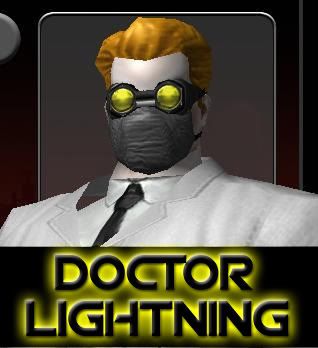
This is Doctor Lightning on a break from a crime council meeting deep in the mountains of the Soviet Union.

Thank you Dare for your insightful review on this wonderful neo-noir/horror movie. Truly the message that is neo-noir/pulp is rapidly spreading.

Mr. Gates, your article on pulp-ish music was truly inspirational and has motivated me to look up the information you mentioned.

Gabriel, I was also pleased with your entries on the JSA: Libery Files, Doctor Who and the English martial art of Baritsu.

This is Doctor Lightning signing off...

Friday, June 29, 2007

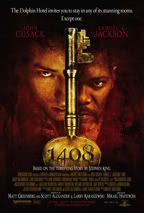
1408: Enter if you DARE!

What if you experienced a personal tragedy that left you with no beliefs to cling to?

What if you so desperately needed to experience a paranormal phenomenon - just to see for yourself that there is indeed something more out there?

That's exactly where writer Mike Enslin (John Cusack) finds himself after a heartbreaking occurrence sends his own life and career into a downward spiral of drunken despair. Choked by an unnatural obsession with the afterlife, Enslin has abandoned his serious literary pursuits in favor of writing banal travel books about "haunted" tourist attractions.

But one day, Mike Enslin receives a postcard warning him not to stay in Room 1408 of New York's Dolphin Hotel. Of course, he simply cannot resist. After all, this may be the answer to the prayers he thought no higher being was around to hear.

After repeated warnings from the hotel's manager (Samuel L. Jackson), Enslin finally gets the room - and an 800 dollar bottle of scotch.

Then, all hell - as they say - breaks loose...

That's the basic setup for 1408, and it's quite the eerie ride. "Stay Scared" is a motto Enslin often repeats to his readers, and this movie certainly does its best to ensure the same reaction from viewers.

John Cusack and Samuel L. Jackson are both promoted as the stars of the film, but don't be fooled by the double billing. Cusack is most definitely the main character. Samuel L. Jackson actually only has a small (but nonetheless very effective) part. Catherine McCormack also appears in a minor role, and Tony Shalhoub (from Monk) shows up in what turns out to be a glorified cameo at best.

In fact, there are many scenes where Cusack is essentially acting by himself. He's a true marvel to watch at work. As a result, the hotel room ends up becoming a "character" in its own right.

1408 reminded me of a mix between Silent Hill (both the movie and the games) and Dark Water (that lame Jennifer Connelly horror flick), but this is thankfully much better than either of those.

This film adaptation of Stephen King's short story (from Everything's Eventual) is nothing short of weird. If you like your horror with a little more intelligence and bite to it, don't be afraid to take the room key and unlock the mysteries of 1408.

Thursday, June 14, 2007

Justice Society of America: The Liberty Files review

Good evening America. Gabriel here broadcasting from on top of the Empire State Building. Tonight's entry is brought to you by Luxor Soap.

DC Comics has a special place in my heart. I don't know what exactly but something about DC has always appealed. Marvel (after the disgusting, so-called Circulation Wars) has repulsed me. They pretty much have turned their back on what made their characters so great. Even their movies are shit. But this entry isn't about why Marvel sucks (that's for another time).

Getting back... I've always like the team books. Seeing the group dynamic, the contrast in personalities, MO's and costumes is such an immersive thrill. The Outsiders, the Justice League of America, the Green Lantern Corp,the Teen Titans. All great titles. But there is one title which I always liked. The Justice Society of America. Something about this team REALLY speaks to me.

My friend Mitch summed it up nicely in 3 words. "They're old school." He's quite right. Many, many heroes of the JSA have been around since WW2. And if not them, then the names. That's right. Their names. The JSA is about passing on the torch. The legacy of being a hero. If I can paraphrase a quote I heard from two writers at the 2007 Comic-Con in NYC - "The Titans teach you to be a team. The JLA teaches you to fight but the JSA teaches you to be heroes." Oh very true. The adventures the JSA have are much more... Well... Adventurous, more human, more dramatic. Even their villains seem much more intriguing than the ones the JLA or Titans have face.

Moving along. Being a fan of the "old school" I naturally picked up anything and everything about the JSA. JSA issues, trade paperbacks, crossovers et cetera. Their new series is simply amazing. Anyway, on to the main point of this entry.

At the NYC Comic-Con, I was browsing through the boxes of various vendors when this caught my eye.

Whoa. Such an interesting look. I scan the back, skim through the book and I was suitably impressed. WW2 espionage! Holy shit! Well I'm sold. It's a decision I was quite pleased with.

It takes the idea that the JSA were an espionage group operating for the US Government. Every character has an intriguing look to them. Batman (codenamed the Bat) is dressed like an army commando for example.
  • The Good - The art is amazing. The color, the inking, the penciling, the character designs. The dialogue, I'm pleased to say, isn't a cliché of 1940s speak like so many other comics set during that time. The story, involving a Nazi secret weapon, is simply thrilling. The surprise ending will really give you a kick to the balls.
  • The Bad - The 2nd story set during the Cold War seems too much like regular super hero stories. I wasn't too impressed with it. I felt as if it was too rush and there some glaring plot holes with regards to continuity.
  • The Ugly - While the sheer number of heroes set in the "mystery men" mold is truly amazing, one can't help want MORE heroes and villains.
I recommend this book to anyone who's a fan of the JSA, WW2 espionage and pulp fiction mystery men.


From Booklist
The first generation of superheroes arrived just in time for World War II. To that era Jolley and Harris return, but not quite, for they conjure a world subtly different than even standard comic-book reality. Batman is called in to help two other costumed crime fighters apprehend Jack the Grin (i.e., the Joker), thought to be carrying plans for a German superweapon. The mission is accomplished, and the captured document indicates that the Nazis have a "super-man."

Fortunately, Uncle Sam also has a superman--namely, Superman, though he is top secret. He has a secret, too: the reason he was sent, or, rather, expelled, to Earth. The action stays hot and heavy, through WWII and into cold war H-bomb espionage. Batman and peers encounter several horrifying supervillains, capped by their most dangerous opponent ever. This Batman is a domineering, rather paranoid good guy in a dangerous world that Harris' active compositions and sharp lines, colored in dark shades lit by explosions, make more exciting than, to date, Batman movies have been.
Ray Olson

Copyright © American Library Association. All rights reserved


Friday, June 8, 2007

Doctor Who and pulp fiction

Good evening America. This is Gabriel with a secret communique broadcasting live from the Flying Reaper's radio room.

Doctor Who may be British sci-fi (there is a distinct FEEL to British sci-fi but that's another article for another day)but it's obviously been influenced by the great pulp novels/comics of yesteryear. Super science, horror, space opera, mystery... It's all there people.

Take the following TV episodes for example
  • The Talons of Weng Chiang is quite entertaining. You have murderous crime syndicates, a time-displaced mad scientist, giant rats, an animated doll filled with murderous intent. All of which set during Victorian Era England!
  • Mask of Mandragora, set in 15th century Italy involves a violent cult, courtly backstabbings and an alien entity.
  • Pyramid of Mars is a real cracker of a story. Robot mummies, otherworldly entities which were worshipped as Egyptian gods and madman with the power to destroy worlds.
  • The Daemons has the hero facing down apparent demonic creatures which seek to lay waste to the planet if Earth fails to pass judgement.
  • Horror of Fang Rock is a chilling story of an alien creature stranded on Earth with plans of making it into a base of operations against another alien race. Set during the Edwardian Era, the dialogue is engaging and delightful.
  • Ghost Light, back once more to the Victorian period, the intrepid hero races to find out what is causing the madness in a decaying mansion filled with evil.
  • Image of the Fendahl has a scientist studying an ancient skull with a pentagram on its crown which is apparently the remains of a monstrous entity from an alien culture's mythology. It's not a coincidence that the Fendahl and the Fendahleen look something straight out H.P. Lovecraft's writings.
  • The War Games A gentlemanly war is more than it seems as the hero discovers soldiers from other eras.
  • Black Orchid, another Edwardian Era story this time involving a dark family secret which is hidden in the secret passages of a sprawling mansion.
  • The Abominable Snowmen 1920s Tibet is the backdrop for a dangerous mission investigating the strange occurrence of the Yeti.
  • The Green Death has a supercomputer gone insane in a bid to take over the world by any means necessary.
  • The Android Invasion pits the hero against robotic duplicates running among in an English countryside

See the obvious influences? Supercomputers, robots, bizarre mysteries, science run amok!

Something else that's quite interesting is Doctor Who & the Invaders from Mars. An audio drama published by Big Finish, it tells the tale of the Doctor in New York.

It's 1938 and the Doctor & Charley land in NYC. They run afoul of mobsters with some odd technology and it turns out the Halloween invasion transmitted over the radio was, in fact, a real invasion from Mars! Well... Sort of.

The dialogue is witty and quick, the story immersive and fun. The voice acting... well. God bless the British but the attempt at American accents is laughable and corny.

The Martians sound exactly like something out of an old time radio show and they fit perfectly in the grand scheme of the story.

I highly recommend Doctor Who if you desire a nice change of pace with regards to Sci-Fi and Horror.

Musical Musings- Pulp Themes (an opinion)

Hi, folks. Don here, broadcasting from the radio room of The Flying Reaper, Dr. Lightning's all-purpose transformable armored zeppelin. This post is about music: what it means to my pulp-fan's brain.

In 1872, french composer Camille Saint-Saens wrote a "symphonic poem" called "Le Rouet d'Omphale" (or "Omphale's Spinning Wheel"). The topic of this classical music piece is the legend of Hercules: he finds himself in exile, in service of the Lydian queen Omphale. She forces the hero to dress as a woman and to perform the duties of a maid and seamstress. The piece is lilting and flowery, a soft and harmless musical composition... until the middle third. At this point in the narrative, Hercules bemoans his fate to Omphale as she forces him to spin wool at her feet. This passage of the music is mournful, full of aggression and sadness and regret. It is a bit of a downer, and not heroic at all in this light.

But:

In 1937, the Mutual Broadcasting System first broadcast a radio program called "The Shadow", starring a young Orson Welles. The famous opening and closing lines ("Who Knows What Evil...") were not performed by Welles, but by a recording of radio actor and former Shadow (when the character was an announcer) Frank Readick Jr. Behind this recording was an orchestral version (later to be stripped down to just an organ) of...

the middle third of "Le Rouet d'Omphale".

Now, in this new light, the piece has taken on a new feeling to many that hear it: dark and vengeful when in it's full orchestral form, foggy and mysterioso when played by the organ. "Omphale's Spinning Wheel" has since become "The Shadow's theme".
______________________________________________________
Music has a strong power to create images in the minds of the listener, whether it's a piece connected with a famous scene in a movie (think of the "Jaws" theme), or whether it causes the listener to dream up the images themselves. I've always been a big fan of musical themes for stories and characters, and they've always helped me to see the events depicted in a story more clearly.

Another piece by Saint-Saens that fits perfectly with The Shadow is his Symphony No. 3 In C Minor Op. 78 , particularly the leitmotifs present in the beginning of the first and third movements. It lends itself, I believe, to stealthy pursuits. Agents move on their orders. A taxicab pulls away from the curb, the driver tersely watching his quarry as he trails a dark sedan through the night-time streets. A mobster vanishes into the darkness, only to be replaced by a cloaked and slouch-hatted figure, briefly seen under a street-lamp.

It is a powerfully visual piece of music.

Other music from other sources creeps into my head from time to time when reading pulps. For Doc Savage, I think the perfect theme would be "Olympic Fanfare" by movie-music master John Williams. Another John Williams composition, ("The Mission"- you would probably know it better as the NBC Nightly News theme) would be a perfect theme for one of my characters, Challenger Storm (shameless plug!). I admit, it may be hard to distance your head from the thematic elements and movies the pieces were written for, but trust me: it can be done.

A final example of classical-style music matching well with pulp fiction can be seen in Chris Kalb's Spider "Flash Trailer" (that's the black & white cartoon near the bottom of the page). Carl Orff's "O Fortuna" (from his "Carmina Burana") is used to great effect here. This piece has been used (some would say "overused") many, many times in the past, but I don't think it's ever fit as well as it does here. The element of grand horror and epic struggle present in those Spider novels matches perfectly with the bombastic choral arrangement and crashing symbols. "Epic" does not do the description justice.